
DUNQUIN HARBOR (An Daingean in Irish)
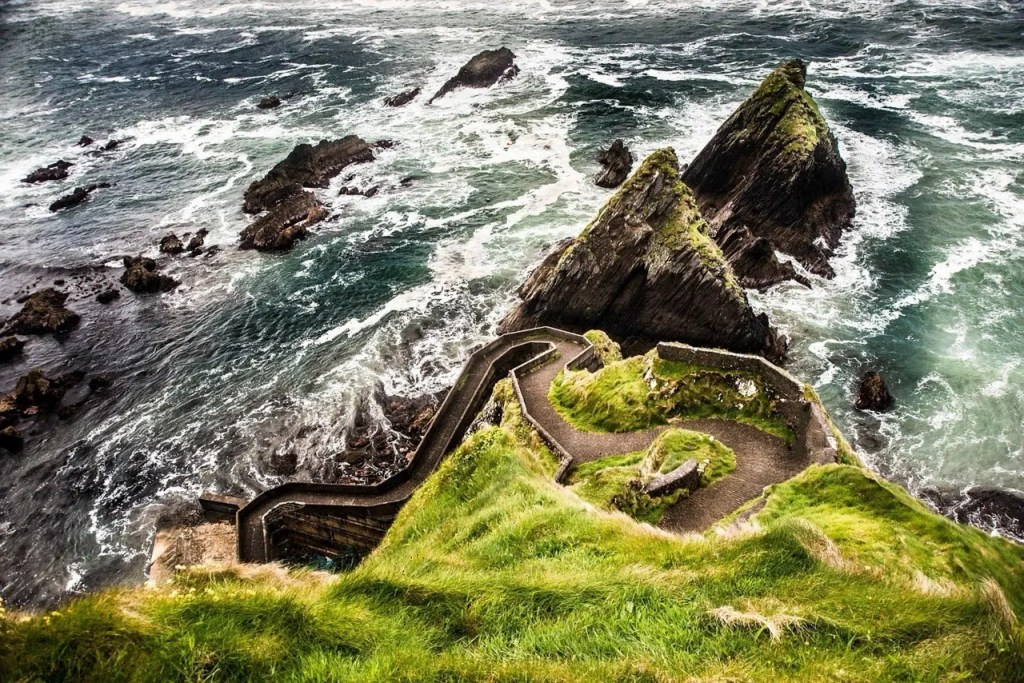
The Gateway to the Atlantic
Perched on the westernmost tip of the Dingle Peninsula, Dunquin Harbor (An Daingean in Irish) stands as a testament to Ireland’s enduring relationship with the sea. In the mid-1800s, when our story takes place, this dramatic coastline served as more than just a fishing port – it was a gateway between the mortal world and the mysterious realm of the selkies.
Historical Significance
During the 19th century, Dunquin Harbor was a bustling fishing community where daily life revolved around the tide’s ebb and flow. Local fishermen would launch their traditional currachs (leather-covered boats) from the steep slipway, braving the Atlantic’s mighty waves. This same harbor would have been familiar to Máiréad, our Selkie Queen, as she navigated between her two worlds.
Selkie Lore
Local legends speak of seals gathering on the remote beaches near Dunquin, especially during full moons. Fishermen’s wives would warn their children never to approach a seal too closely, for it might be a selkie in disguise. The harbor’s twisted path down to the sea – known as the “Sheep’s Path” was said to have witnessed many a selkie’s transformation under moonlight.
Connection to “Máiréad, The Selkie Queen”
The harbor’s natural architecture provides the perfect setting for key scenes in our story. The steep cliffs offer natural protection for selkie gatherings, while the isolated beaches provide essential privacy for transforming. The local fishing community’s deep respect for seals mirrors the delicate balance between human and selkie worlds in our tale.
Cultural Impact
Today, Dunquin Harbor remains a powerful symbol of Ireland’s maritime heritage. Its dramatic cliffs and winding path have inspired countless artists, writers, and filmmakers, making it the perfect real-world anchor for our selkie queen’s story. The selkie traditions of Dunquin connect with those of other musical havens like Doolin, where legends say selkie songs would blend with traditional Irish music. While Dunquin’s dramatic cliffs provided physical sanctuary for these mysterious creatures, Doolin’s music offered them a different kind of protection – the ability to hide their otherworldly voices among the melodies of human musicians.
Local fishermen still tell tales of strange songs carried on the wind during stormy nights, and the harbor’s ancient steps continue to spark imagination about who – or what – might have traveled them in centuries past. Perhaps most importantly, Dunquin Harbor stands as a reminder of the delicate balance between the human world and the mysterious realm of the selkies, a theme that resonates deeply throughout “Máiréad, The Selkie Queen.”
Curious about the world of ‘Máiréad, The Selkie Queen’? Follow my TikTok and Instagram for exclusive peeks into the story’s development.
Photo by: Christian_Birkholz Shared on Pixabay https://pixabay.com/photos/ireland-dunquin-paper-dingle-iceland-202511/


 Máiréad, The Selkie Queen - Irish Mythology YA Fantasy Novel
Leave a reply to Dianne Cancel reply